
Dear Editor:
The best answer we can give to this question is from Romania.
Abortion was legal in Romania until 1965. Then, the dictator Nicolai Ceaușescu made abortion illegal because he wanted more births to expand his army. Making abortion illegal killed thousands of women. The more he enforced the law, the more women died.
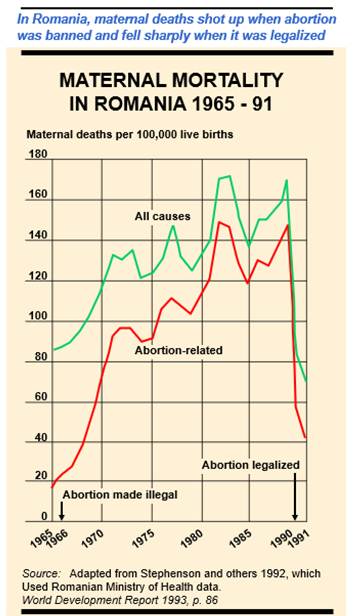
When Ceaușescu was overthrown in 1990, one of the first laws that was revised was the abortion law. Abortion was made legal again. Within a year, abortion-related deaths fell like a stone.
ASPIRE dreams of having a Romania-like experience in the Caribbean. Only two countries in our region have made abortion broadly legal: Barbados and Guyana. What is their experience?
In Barbados, admissions for complications of induced abortion at Queen Elizabeth Hospital (QEH) fell by at least 43% between 1982, the year before the law, and 1992, the tenth year of the law. The decline among adolescents was even greater, 59%.
Similarly, in Guyana, in 1991, four years before the law there, septic abortion was the third highest cause of admission to Georgetown Public Hospital Corporation (GPHC). Thirty years after the law in 2025, admissions for complications of induced abortion had declined by 97%.
This sounds impressive, until we realise that these results were spread over ten years in Barbados and thirty in Guyana. In neither country was the law implemented with any sense of purpose. In both countries, those goals could have been accomplished in fewer than five years.
There is a common fear that making abortion legal will increase the number of abortions. Data on Guyana from the Allan Guttmacher Institute (AGI), show that to be unfounded. The abortion rate is lower by 20%.
Another widespread misconception is that making abortion legal will result in a loss of interest in family planning. Data on Guyana from AGI show that the unintended pregnancy rate is lower by 28%. So contraceptive uptake has improved, not declined.
This improvement is almost certainly linked to the impact of post-abortion contraceptive counselling. More than 90% of women who have abortions at GPHC request IUCD or implants.
We must invest in public education and Health and Family Life Education (HFLE) so that if/when the High Court declares the abortion law unconstitutional, we are well prepared to achieve the results of Barbados and Guyana in a fraction of that time. We must strive for a Romania effect.
Sincerely,
ASPIRE
Disclaimer
The opinions presented in this content belong to the author and may not necessarily reflect the perspectives or editorial stance of Nature Isle News (NIN). Opinion pieces can be submitted to editor@natureisle.news