

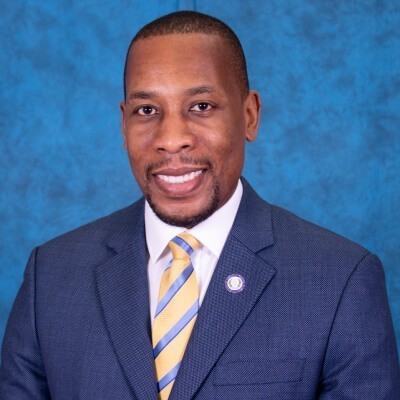


By Staff Writer
BASSETERRE,, St. Kitts, Apr 1, CMC -The Eastern Caribbean Central Bank (ECCB) has launched its strategic plan for the period 2026-31, seeking too bring meaningful transformation to the people of the Eastern Caribbean Currency Union (ECCU), maintain a string Eastern Caribbean (EC) dollar as well as participate in the pilot for the Caribbean Community (CARICOM) payment and settlement system, CAPS.
The ECCB serves as a central bank for the islands of Antigua and Barbuda, Dominica, Grenada, St. Lucia, St. Vincent and the Grenadines, and St. Kitts and Nevis, while the ECCU is the monetary union of the Organisation of Eastern Caribbean States that also includes Anguilla and Montserrat.
Speaking at the launch of the strategic plan on Monday night under the theme “The Big Push: Collective Action for Shared Prosperity in the ECCU,” ECCB Governor Timothy Antoine said the plan is built on six pillars that include monetary stability, intended to keep the EC dollar strong, as well as keeping deposits safe.
“That’s financial stability. Under this plan, we will introduce deposit insurance to strengthen depositor protection. Under this plan, we are going to establish an office of financial conduct to hold banks accountable and ensure fair treatment of customers.
“Under this plan, we will exercise oversight of bank fees,” Antoine said, noting that under the first two pillars, monetary stability and financial stability, are the bank’s core responsibilities because without stability, there’s no confidence.
“There’s no investment. There is no sustained growth. So we must always keep our focus on that. But there are other things that the ECCB agreement requires us to do, and that is to support growth and development.”
He said that the third pillar of the plan is payment monetization and financial inclusion.
“Under that pillar, we are going to scale up our partial credit guarantee programme. At the moment, we have done over 300 loans at a value of EC$30 million (One EC dollar=US$0.37 cents), and we’re just getting started.
“We are going to scale that up to bring support for farmers, fishers, creatives, and small businesses all across our currency union. The big push needs credit, so we have to unlock credit.”
Antoine said that the ECCB will also seek to broaden access to the credit bureau, including credit unions, “to again unlock more credit for our people and for our businesses.
“In addition, we will introduce a fast payment system to make transactions faster and cheaper across the currency union, and we will participate in the pilot for the CARICOM payment and settlement system, CAPS, which is a real-time, low-cost, cross-border payment system in local currencies. ”
Antoine said that for the four pilot countries or central banks, which are Barbados, Bahamas, Trinidad, and Tobago, and Eastern Caribbean, ”the ECCU will be able to pay in our local currency, pay in theirs, and we’ll settle behind the scenes in US dollars.
“The next settlement will be in U.S. dollars between the central banks. That’s coming. That product is about to begin,” Antoine told the audience in the Eastern Caribbean countries.
He said that the other two pillars are digital and data-driven culture and organisational effectiveness.
“At its core, our plan does three things. It protects stability, enables transformation, and helps drive growth,” he said, noting that three years ago he asked the question “what will it take to double the size of our economies over the next decade?
“That question was a vision. Tonight, that vision becomes action. Folks, the big push is not a slogan. It is a strategy for transformation, a commitment to regional coordination and execution, and a call to collective action.
“And let me be clear, the big push is not growth for growth’s sake. It is about diversifying these economies, resilience, competitiveness, and shared prosperity. Above all, it is about people.”
The Central Bank Governor said the new strategic plan is more than numbers and more about lives and livelihoods.
“Indeed, its central promise is shared prosperity for the people of the ECCU. It is about whether a young graduate finds opportunity at home or feels compelled to pursue opportunity abroad.
“ A farmer can produce competitively and help reduce our food import bill. Small businesses can grow and create jobs, and whether growth is something we simply measure or something our people actually feel, the big push demands, quite frankly, a reimagining of our development model. ”
Antoine said that in doing so, the ECCU member countries must confront some hard and inescapable truths.
“Folks, our development challenge is structural, not cyclical. Over 80 per cent of what we eat is imported, leading to high food import bills and a high incidence of disease and death. Almost 90 per cent of the energy we consume comes from fossil fuels, driving higher electricity costs and reducing competitiveness.
“Connectivity within our region is costly and inefficient. And yes, all of us know it is cheaper to go to New York or Miami than it is to go to Barbados or Trinidad. Credit to the private sector remains too low. Productivity is stagnant or declining,” Antoine said, adding that the population in most countries in the ECCU is actually falling.
“Yes, you better believe it. Falling. How do you grow and double the size of an economy with a falling population? We have to address this issue, folks. We have to wrestle with these issues, and we have to solve them.”
He said climate risk is not distant, describing it as immediate and macro-critical.
In addition, Antoine said that the sub-regional countries must shift their focus in tourism from simply chasing volumes and arrivals to value, as measured by visitor expenditure.
“Taken together, these hard truths are not mere inconveniences. They are structural constraints on our growth, our resilience, and our sovereignty, and let me say this plainly as I could, inaction is costly.
“Inaction is not neutral. It compounds and accelerates decline. And that is why inaction is not a serious option. We have to do something about these issues,” he said, adding that stakeholders can either choose to curse darkness or light a candle.
“This strategic plan lights candles on many of these issues. But we cannot do it alone. The big push is not a panacea. And it is not the responsibility of the ECCB alone. I want to stress that. This is a big and ambitious plan.
“But we, with all of our resources and all of our energy, cannot do it by ourselves. After all, the ECCB itself does not produce growth. We create the conditions that make growth possible. We keep the EC dollar strong. We safeguard the financial system. We build confidence.
“But growth must be generated by businesses, our people, and our governments. Our governments in particular must provide the enabling environment and deliver critical infrastructure,” Antoine said, noting that is why the ECCB sought and secured consensus from the Monetary Council for coordinated regional and national action.
He said under the big push, the Monetary Council has determined four priorities. Food security, energy security, connectivity and logistics, noting “and by that I am speaking about regional travel and maritime travel” including the idea of a regional airline, OECS Air, being discussed.
“I want to assure you that the ECCB is actively supporting all four,” Antoine added.
CMC/pr/ir/2026