

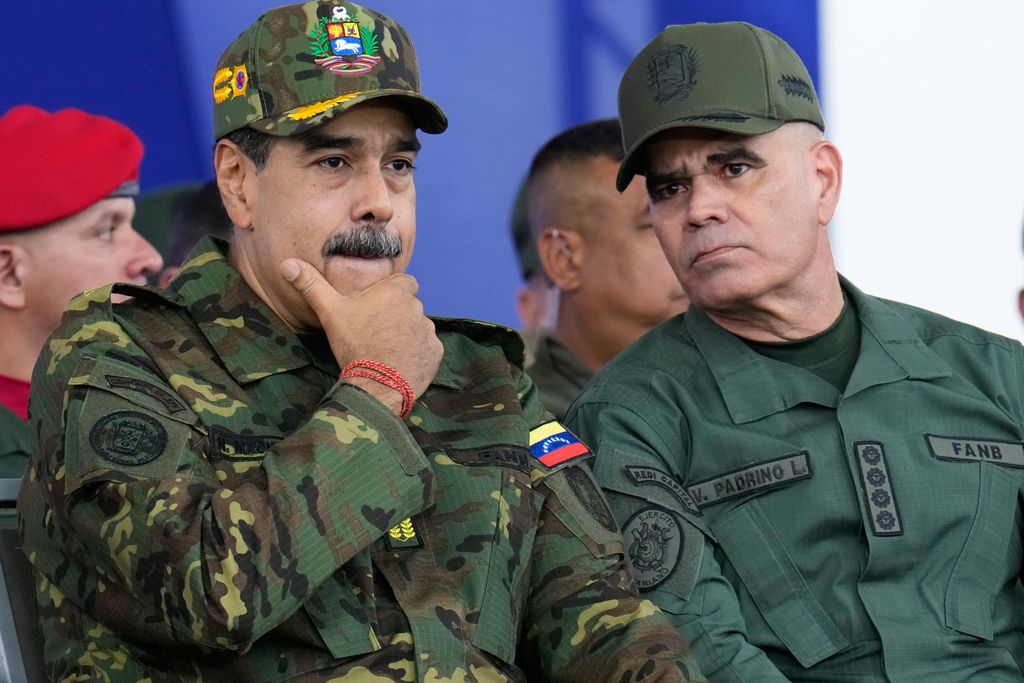


Venezuelan leader urged to resign or face full force of ‘narco-terror’ crackdown
A tense phone call last week between the White House and Venezuelan President Nicolás Maduro offered the embattled leader one final deal: resign immediately, leave Venezuela with his wife and son, and receive safe passage—or face the full force of an expanding US campaign targeting what Washington has labelled a “narco-terrorist regime.”
According to US media reports, the call—reportedly brokered by Brazil, Qatar, and Turkey—collapsed almost instantly. Maduro demanded global amnesty, control of the armed forces, and time to negotiate an exit, conditions Washington rejected outright.
Days later, President Donald Trump stunned the region by declaring Venezuelan airspace “closed in its entirety,” warning airlines, drug traffickers, and human smugglers that the order required “immediate attention.” In Venezuela, the statement was widely interpreted as a signal that land operations could begin imminently.
For Trinidad and Tobago—just seven miles from Venezuela’s coast at its closest point—the prospect of US military action on Venezuelan soil has triggered deep concern among national security officials.
A senior local intelligence officer, speaking to Guardian Media on condition of anonymity, said any destabilisation across the Gulf of Paria would send “shockwaves straight into Trinidad.”
“We are already managing the highest-ever flows of irregular migrants,” the officer said. “If this escalates into open conflict, the humanitarian impact on Trinidad and Tobago could be unprecedented.”
The phone call came amid a sweeping escalation of US pressure on the Maduro administration.
Washington has revived long-standing allegations that Venezuela’s top leadership runs the Cartel de los Soles, described by US officials as a state-embedded drug-trafficking network. Last week, the US formally designated the cartel as a Foreign Terrorist Organisation, placing Maduro, Interior Minister Diosdado Cabello, and Defence Minister Vladimir Padrino López in the same legal category as al-Qaeda and ISIS.
The designation significantly widens Washington’s authority to conduct military operations without additional congressional approval. US Defence Secretary Pete Hegseth said the move “opens up a lot of new options,” while President Trump hinted that land-based missions targeting cartel infrastructure could begin “very soon.”
Venezuela has rejected all US allegations as politically motivated. In a statement this week, the Foreign Ministry said it would not waste “valuable governing time” responding to “slanders,” insisting the population was “united and cohesive” and preparing for the Christmas season.
Inside Venezuela, however, residents in coastal communities facing Trinidad have reported heightened military activity in the wake of Trump’s airspace declaration. Videos shared online show increased patrols and troop deployments, though Caracas has not publicly confirmed any mobilisation.
Regional analysts warn that any conflict in Venezuela—whether limited strikes or a broader campaign—could have immediate repercussions for T&T.
A former Trinidad and Tobago defence official told Guardian Media that the country’s proximity leaves it “no buffer zone.”
“If the US moves from maritime strikes to land operations, this becomes a live security threat for Trinidad and Tobago,” the official said. “The spillover will not be abstract—it will arrive on our shores.”
Source-https://www.guardian.co.tt/