



By Staff Writer
ST. JOHN’S, Antigua, Dec 17, CMC – The Antigua and Barbuda government, Wednesday, said it is “actively engaged” in discussions with the United States authorities after President Donald Trump included nationals from the island and two other Caribbean Community (CARICOM) countries who would either be “fully” restricted or have limited entry into the United States.
“I have begun discussions with the U.S. State Department for clarity on all aspects of this matter, including the position of persons with visas issued before December 31, 2025. Our general objective is to engage fully with the U.S. Government to discuss the concern expressed about the basis for the visa restrictions, namely that ‘Antigua and Barbuda has historically had Citizenship by Investment without residency,” Antigua and Barbuda Ambassador to the United States, Sr Ronald Sanders said in a statement.
“Our efforts are directed at reaching understandings with the U.S. Government that would allow the restoration of visas to Antigua and Barbuda nationals,” he said, adding that further information will be provided “as discussions proceed with the U.S. authorities”.
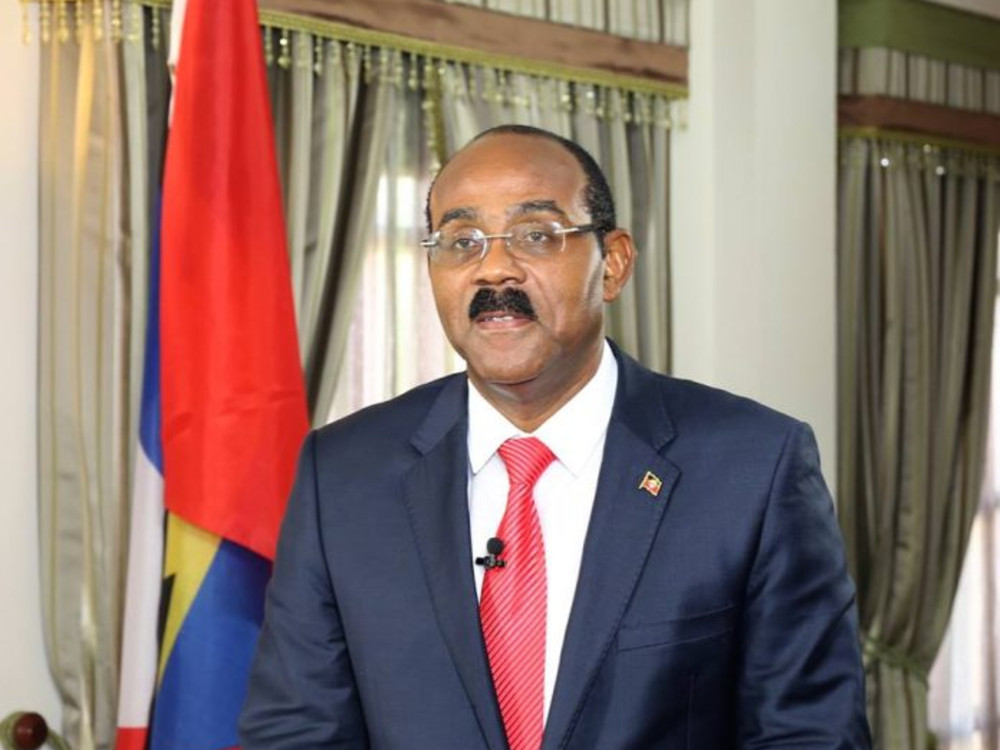
Earlier, Prime Minister Gaston Browne said that his administration had taken “careful note” of the proclamation issued by the United States government, saying “we are deeply disappointed that Antigua and Barbuda has been included in this proclamation on the stated ground that our Citizenship by Investment Programme has historically operated without a residency requirement.
“ That assertion does not reflect the present reality of our laws,” Prime Minister Browne said, noting that over the past year, Antigua and Barbuda has worked “closely and constructively with several departments of the United States government to strengthen safeguards within our Citizenship by Investment Programme.
“We have engaged in good faith, accepted practical suggestions, and taken concrete steps to ensure that our programme presents no risk whatsoever to the security of the United States.”
He said that as part of this process, the Parliament of Antigua and Barbuda has recently enacted comprehensive new legislation strengthening every aspect of the Citizenship by Investment Programme, including due diligence, transparency, information-sharing, and enforcement.
“Importantly, this legislation introduces a mandatory 30-day physical residency requirement in Antigua and Barbuda as a strict condition for qualification for citizenship,” Prime Minister Browne said, adding, “it is therefore an error to state that Antigua and Barbuda’s Citizenship by Investment Programme operates without a residency requirement.
He said that Sir Ronald had been in contact with the United States Department of State and “was informed that State Department officials were themselves surprised by the proclamation and had received no prior notice of its issuance.
Browne said that apart from the diplomatic initiatives, he will be writing directly to President Trump and to the Secretary of State, Marco Rubio, ”offering the full engagement and cooperation of the Government of Antigua and Barbuda to address any concerns and to take all reasonable steps necessary to allow for the restoration of all visa categories.
“Antigua and Barbuda values its relationship with the United States, a relationship that predates the independence of both our nations and is grounded in long-standing ties of friendship, shared democratic values, and close people-to-people connections. The United States is Antigua and Barbuda’s most significant trading partner and continues to enjoy a substantial and consistent trade surplus with our country.
“The Government will do everything within its power to ensure that the excellent relations between Antigua and Barbuda and the United States continue based on mutual respect, cooperation, and accurate understanding,” Browne added.
On Tuesday, President Trump, in his latest executive order, said that apart from Antigua and Barbuda, nationals from Dominica and Haiti would also be affected by the immigration policy.
He said that during his first administration, he had restricted the entry of certain foreign nationals into the United States to prevent national security and public safety threats from reaching our borders.
He said that the Supreme Court upheld these restrictions and, as a result, he reinstated these successful policies in his executive order of January 2025.
“It is the policy of the United States to protect its citizens from foreign nationals who intend to commit terrorist attacks, threaten our national security and public safety, incite hate crimes, or otherwise exploit the immigration laws for malevolent purposes.”
He said in an earlier proclamation that he had restricted the entry of foreign nationals into the United States from countries with deficient screening and vetting information to protect the national security and public safety of the United States and its people.
Trump said that most of the countries identified in the earlier proclamation, as well as others, continue to exhibit woeful inadequacies in screening, vetting, and the provision of information.
He stated that some of these countries have offered Citizenship by Investment (CBI) programs without requiring residency, which poses challenges for screening and vetting purposes.
Under the CBI programme, several Caribbean countries, including Antigua and Barbuda and Dominica, offer citizenship to foreign investors in return for making a substantial investment in the socio-economic development of these countries.
Trump said both Antigua and Barbuda and Dominica have “historically had CBI without residency” and that the entry into the United States of nationals of these two countries as immigrants, and as nonimmigrants on B-1, B-2, B-1/B-2, F, M, and J visas, is hereby suspended.
He said consular officers shall reduce the validity for any other nonimmigrant visa issued to nationals of Antigua and Barbuda and Dominica “to the extent permitted by law.
Trump said in its latest executive order justifying the action taken against the Caribbean countries that “as an example, a foreign national from a country that is subject to travel restrictions could purchase CBI from a second country that is not subject to travel restrictions, obtain a passport in the citizenship of that second country, and subsequently apply for a United States visa for travel to the United States, thus evading the travel restrictions on his or her first country.
“ Additionally, United States law enforcement and the Department of State have found that, historically, CBI programmes have been susceptible to several risks. These risks include allowing an individual to conceal his or her identity and assets to circumvent travel restrictions or financial or banking restrictions,” he said.
CMC/pr/ir/2025