



By Staff Writer
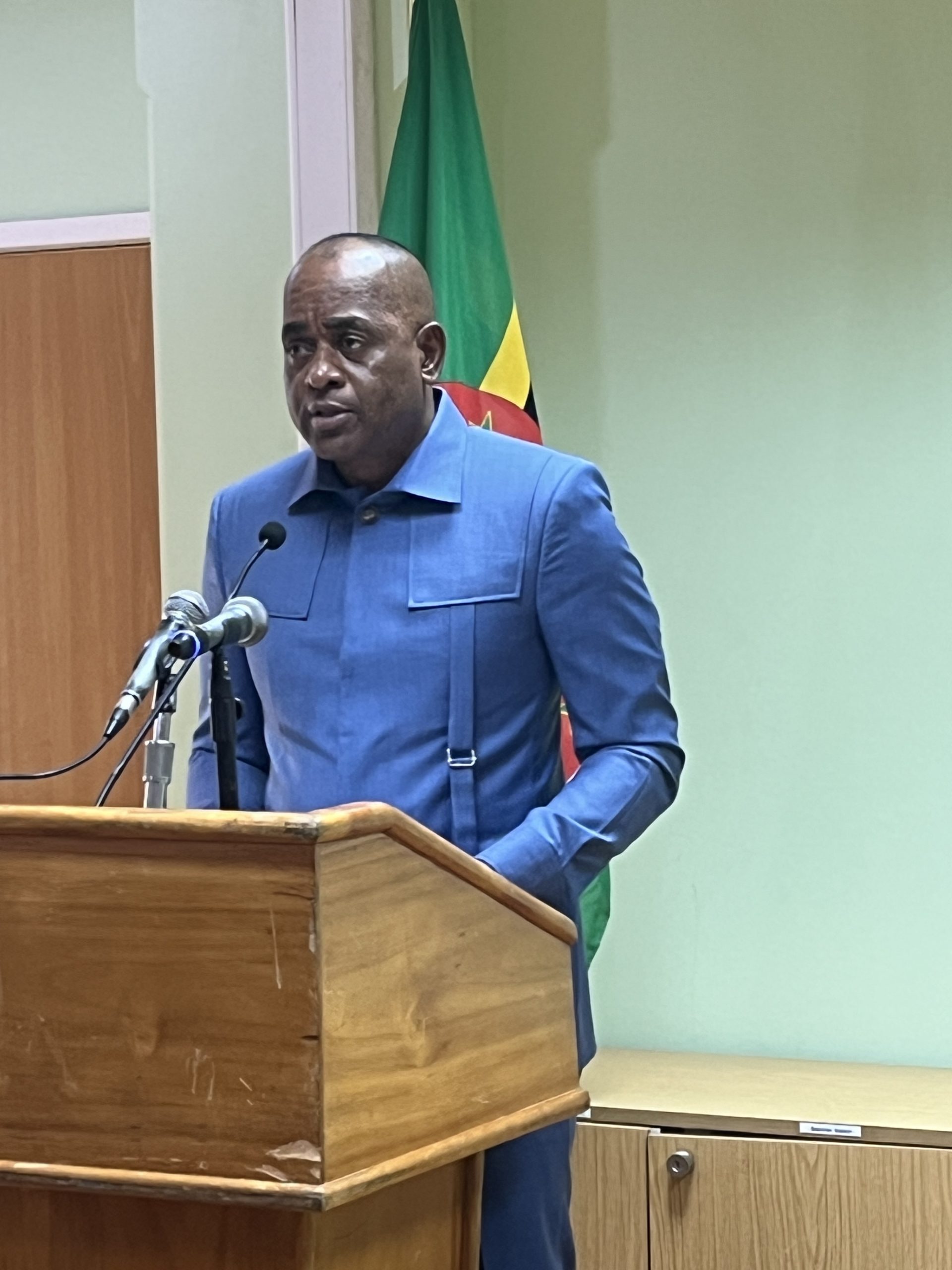
ROSEAU, Dominica, Dec 16, CMC – Prime Minister Roosevelt Skerrit has defended his government’s decision to implement an increase in the minimum wage amid concerns by private sector leaders who have raised a number of issues.
Dominica recently implemented a new, tiered minimum wage structure effective December 1, 2025, replacing the old EC$7.50/hour rate (One EC dollar=US$0.37 cents) with varied increases for different sectors, such as agricultural workers now at EC$9.75/hour, and daily-paid workers in tourism/manufacturing at EC$9/hour, with specific rates for cashiers, security guards, drivers among others.
Skerrit told an end-of-year news conference that his government appreciates the “significant role” the private sector continues to play as an important pillar of Dominica’s economy, especially in the employment of thousands and making key investments in the development of our national product.
He said that while he has taken note of the concerns raised since the minimum wage increase went into effect, the government had established the Minimum Wage Advisory Board precisely to ensure that all sectors had an opportunity to contribute to the process.
He said that the board conducted its review over several months and considered submissions from the representative organizations of the private-sector.
“We recognize that some recommendations were not fully reflected in the final schedule of rates. However, it is important to clarify that the board’s mandate required it to balance private sector concerns with the overriding objective of ensuring a fair and livable wage for workers, particularly those at the lowest end of the income scale.”
Skerrit said that while the implementation date has necessitated adjustments for some employers, the government had to weigh this against the urgent need to address wage stagnation and the rising cost of living affecting thousands of workers across multiple sectors.
“It is also worth noting that many private-sector employees have not seen real wage growth in over a decade, even as the economy has recovered and as certain sectors have posted strong performance.
“Nonetheless, the Ministry of Labour will review the transition challenges raised by employers and assess whether practical administrative support or reasonable phased arrangements may be appropriate in specific cases.”
Skerrit insisted that the government’s objective is not merely to raise wages but to raise standards, to encourage decent work, and to support a sustainable, competitive, and vibrant private sector.
He said the government wanted to assure the public that the adjustment to the minimum wage is being facilitated in “a responsible, measured, and economically sound manner” designed to protect workers’ incomes without triggering an unnecessary rise in prices.
“Contrary to common misconception, an increase in the minimum wage does not automatically lead to higher inflation. What matters is how the adjustment is managed. Government has therefore adopted a strategy that cushions the economy, supports businesses during the transition, and safeguards the purchasing power of all citizens,” he told reporters.
Skerrit said the minimum wage increase will not cause significant retail inflation, noting that in retail stores across Caribbean economies – supermarkets, clothing shops, hardware outlets – wages typically account for only 10–15 per cent of the final price of goods.
He said the biggest drivers of price increases are external factors, not local wages, adding that retail prices move mainly because of international freight costs, global commodity prices, exchange rate shifts, and import duties.
“A higher minimum wage does not affect these cost drivers,” Skerrit said, adding that businesses have adjustment options that don’t involve raising prices.
Skerrit said that retailers can cushion wage increases through progressive improvements in the efficiency and profitability of supply chain operations by increased productivity, better inventory management, and waste reduction
“Caribbean countries that increased minimum wages in the past decade – Barbados, Jamaica, Antigua & Barbuda, St. Lucia – saw no significant retail inflation linked to wage hikes. The price movements remained tied to global factors, not local labour costs,” Skerrit said, adding that to ensure a smooth and stable implementation, the government is pursuing several initiatives.
These include investments in skills training, digitalization, and process improvements to help businesses generate higher output per employee, temporary relief measures such as reduced duties on essential inputs, faster customs processing, streamlined government services, reduced administrative burdens, and support for energy efficiency.
He said labour-intensive and small enterprises will receive targeted assistance to ensure the wage increase does not place them at risk or lead to unintended inflationary pressure, and that the government is closely monitoring the market to prevent unfair price increases.
“Stronger competition and regulatory oversight ensure that any cost adjustments remain fair, transparent, and justified.
“A fair minimum wage lifts vulnerable workers without burdening consumers. The economy becomes more stable, not more expensive. Government remains confident that these policies will enhance the livelihoods of low-income workers, support sustainable growth, and prevent inflation,” Skerrit told reporters.
CMC/c/ir/2025