By Peter Richards
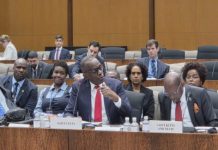
CASTRIES, St. Lucia, Jul 5, CMC – Caribbean Community (CARICOM) leaders opened their four-day summit here on Sunday, underscoring the importance of unity as the region confronts the global challenges that seek to undermine their economic and political stability.
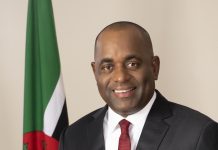
St. Lucia’s Prime Minister Phillip J Pierre, who assumed the chairmanship of the 15-member regional integration grouping, said that this moment calls on all stakeholders to be greater than the limits of the present.
“It calls us to sing beyond election cycles. It calls us to sing beyond national borders. It calls us to sing beyond the pressures of today and towards the Caribbean; we must live for tomorrow.
“We owe that to the founders of this community. We owe it to the generations who struggled for independence, dignity, and self-determination. We owe it to those who believe that small states acting together could become a powerful force for development, justice, and progress.”
Pierre said that above all, the regional leaders owe it to the people of the Caribbean, warning “history may forgive us for disagreements, it may even forgive us for delay, but it will never forgive us for failing to create a stronger, safer, fairer, and more united Caribbean community”.
He pledged that as he assumed the chairmanship of the grouping for the next six months, “I’m prepared to serve and listen to my colleagues while working with them in advancing the common good of the CARICOM people.
“Unity within CARICOM must be foundational. If we are to create a safer place for our people and secure climate justice for them, we need to find an economic space for our youth, offering them a chance to develop and express their creativity while offering them hope.”
Pierre said that the ideals of CARICOM must become real in the lives of Caribbean people, especially the youth.
“The future of CARICOM lies with them, and so they must be empowered to take CARICOM to the next level,” he said, adding that there are a few clear imperatives that must be addressed.
“We need a Caribbean community that is stronger, safer, more inclusive, economically stronger, and more confident in its destiny. We need to work strategically and tirelessly for the sustainability of the region.
“Together, let us move from resilience in solidarity with the people of the Caribbean,” Pierre said, adding that his chairmanship, therefore, must belong not only to governments but to the people CARICOM is expected to serve.
“It belongs to every Caribbean person who still believes that our region can do more and deliver more to the people. During this chairmanship, my commitment will be guided by a simple but important principle. CARICOM must move from conference rooms, communities, rhetoric, from reality, from communiques to results
“Our people must be able to see and feel the benefits of regional cooperation. It is not enough for us to agree in principle; we must implement in practise. It is not enough for us to speak of integration; we must make integration work for the ordinary citizen. It is not enough for our decisions to be recorded; they must be acted upon, measured, and followed through,” Pierre said, warning that an integration that Caribbean people cannot feel will not last.
“Every decision we take must be connected to the lived experience of Caribbean people. Every commitment we make must have ownership, timelines, and accountability. Every major priority must answer one question: how will this improve the lives of our people? “A priority of this chairmanship must be unity. Unity is the foundation on which everything rests, but unity must never be taken for granted and will not happen automatically,” he said, adding it requires work, it requires trust, it requires consultation, it requires consensus on some issues.
“Our common interests are greater than our differences, which we should seek to leverage. The world has often benefited from Caribbean disunity. Larger powers and larger markets can more easily engage a divided Caribbean than a united one. But when the Caribbean speaks with one voice, when we act together, when we negotiate as a block, our collective influence is far greater. Our diversity is not a weakness.”
Outgoing CARICOM chairman, Dr. Terrance Drew, urged his colleagues to be present when crucial decisions have to be made regarding CARICOM.
“Whenever this Community faces matters of great significance, let us ensure that every head of government makes every effort to be present,” said the St. Kitts and Nevis Prime Minister, adding that “our responsibility is to protect this Community, improve it where necessary, modernise it where appropriate, but never, ever lose sight of its immense value to our people”.
He said that whenever CARICOM faces matters of great significance, “let us ensure that every head of government makes every effort to be present for our retreats and caucuses to resolve matters in-house.
“Those sessions remain among CARICOM’s greatest strengths. Away from cameras and prepared statements, colleagues speak candidly. Trust is strengthened.
“No public commentary has ever replaced honest dialogue, but respectful conversation among colleagues committed to a common purpose has repeatedly strengthened this community. May we always preserve that tradition, and so my colleagues the reaffirmation of our unity was never the destination. It was the foundation.”
Prime Minister Drew’s comments at the opening of the 51st CARICOM meeting may have been in response to the controversy over the process that led to the reappointment of Belizean economist Dr Carla Barnett for a second five-year term as CARICOM Secretary General.
Trinidad and Tobago’s Prime Minister Kamla Persad-Bissessar has publicly indicated that she would not recognise Barnett, the first woman ever to be in the position, when her current term expires in August.
Persad-Bissessar arrived at the ceremony on Sunday night after Barnett had delivered her remarks, and Prime Minister Drew, who spoke afterwards, praised Barnett for stewardship of the Guyana-based CARICOM Secretariat and the integration movement as a whole.
“So before I conclude, I wish to express my sincere appreciation to our Secretary General, Dr. Carla Barnett, and her team. Madam Secretary General, thank you for your professionalism, your integrity, and your steadfast commitment to this community.
“Throughout my tenure, whenever I called, you answered. Whenever support was required, you and your team responded with diligence, competence, and excellence. You have served and continue to serve CARICOM with distinction.
“You have understood the importance of preserving the impartiality of the Secretariat while faithfully implementing the decisions of heads of government,” Drew said, adding, “That balance has strengthened this community, and for this, I offer, on behalf of all of us, our sincerest gratitude”.
In her address, Barnett told the audience that from time to time it has been necessary for members of CARICOM to exert every effort to align priorities, strengthen partnerships, and ensure the realisation of their obligations as set out in the Revised Treaty of Chaguaramas.
She said that as the regional leaders gather here for their summit, they “will focus on critical issues and decisions that must be taken to strengthen our regional integration process.
“This will be set against the backdrop of the things we have achieved, and the challenges of the past several years, to guide the way ahead,” she said, adding that “we have strengthened the operations of the CARICOM Single Market and Economy (CSME)…and the commencement in October 2025 of full free movement among four member states as agreed a year ago.
“But while we can acknowledge positively the work we do together as a region, the challenges we face call us to redouble our efforts. We have to do what is necessary to implement key outstanding aspects of the CSME, such as capital market institutions, payments and settlement systems, and expanding movement of persons.
“This requires greater focus and action, not only at the regional level in the Ministerial Councils of the Community, but also at the national level to ensure necessary consultations, parliamentary approvals and any other actions necessary to ensure national implementation of regional decisions.”
Barnett said that in the area of Community development, CARICOM continues to work with Haiti to address the long-standing challenges of governance and security.
She said that the CARICOM Eminent Persons Group continues to work with stakeholders to facilitate dialogue and participation of political and civil society representatives of the people of Haiti, with a view to promoting broad consensus on the pathway and mechanisms to achieving peace and security, and holding credible elections as agreed.
“CARICOM supports the implementation process of the UN Security Council Resolution which established the Gang Suppression Force and two of our Member States – The Bahamas and Jamaica – have been closely involved with the friends of Haiti,” she added.
She said CARICOM also continues to expand its Associate Membership and that, in addition to Curaçao two years ago, “we are welcoming two new Associate Members at this Meeting, Martinique, who is already around the table, and French Guiana; we expect to see their agreement signed in the next day or so”.
CMC/pr/ir/2026