
By Sir Ronald Sanders
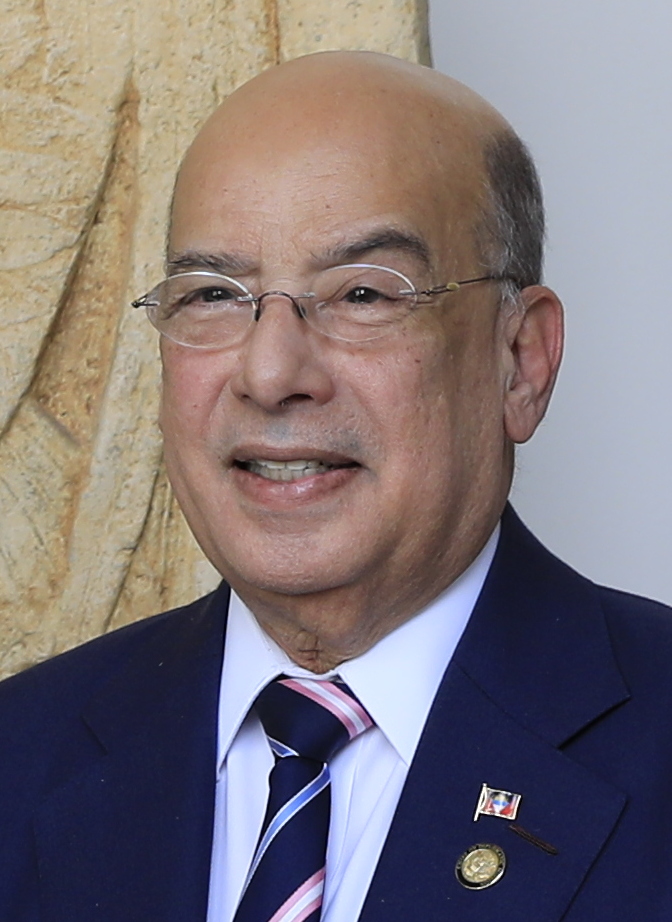
George E. Williams, who died in England on 23 May 2026, was a true Caribbean son: a distinguished Dominican public servant, regional integration pioneer, diplomat, economist, and international civil servant whose life’s work advanced the interests of Dominica, the Eastern Caribbean, and the wider developing world. His passing marked the loss of a man whose intelligence, discipline, and quiet resolve strengthened every institution he served and strengthened the Caribbean’s voice in the international community.
For Dominica, George gave many decades of faithful service. He came from humble beginnings and never forgot them. On one visit to him, after he had returned home to Dominica, he took me to the hills and rugged trails he had walked as a boy to get to school. He spoke of it without complaint and without self-pity; it was simply a decent man recalling the hardship that had shaped him and strengthened his resolve to overcome.
Before entering the higher ranks of diplomacy, he built a solid professional foundation in the public service, working in the Ministries of Agriculture and Finance, where he gained the administrative and economic skills that later made him such an effective voice in regional and international negotiations. Those early years were not simply a waystation in a career; they reflected a lifelong commitment to the hard, practical work of national development and careful stewardship of public affairs.
That commitment came fully into view when he was appointed High Commissioner for Dominica in London, a post he held from 1990 to 2001. His tenure coincided with one of the most difficult periods in Dominica’s economic history, when the future of banana exports and the livelihoods built upon them were threatened by the international disputes known as the Banana Wars. In that struggle, George was a tireless and persuasive advocate for preserving preferential access for Caribbean banana exports to Europe, defending not just a crop but the economic survival of small and fragile societies.
His work in London went far beyond trade. He helped to build Dominica’s High Commission into a confident and effective mission, strengthened consular support for the Dominican community in the United Kingdom, and represented his country in important multilateral settings, including as Permanent Representative to the International Maritime Organization. After retiring from diplomatic service, he returned to serve Dominica on the Integrity Commission, bringing to the defence of transparency and accountability the same seriousness and integrity that had marked his entire public life.
But to speak only of his service to Dominica is to tell only part of his story. George Williams also belongs firmly in the history of Eastern Caribbean integration. The countries that now form the Organization of Eastern Caribbean States should remember him as one of the early pioneers and stalwarts of sub-regional cooperation. He played a leading part in the establishment of the East Caribbean Common Market and was its first Executive Secretary, involved in the detailed technical work, the inter-governmental consultations, and the negotiations that laid the foundations for the sub-regional institutions that followed.
During his tenure at the Eastern Caribbean Common Market, George enjoyed the full confidence and respect of the political leaders of the time. They recognised in him a steady hand, a clear mind, and a regional public servant they could trust with the most difficult questions of economic policy and integration.
It was in Antigua, where the East Caribbean Common Market was based, that I first had the privilege of meeting and working with George. There, we set our shoulders together to promote the economic interests of the Eastern Caribbean countries in CARICOM, the World Bank, and other multilateral institutions. Out of that common work grew a friendship that endured until his death. Those who knew him in that period saw for themselves the qualities that made him such an effective servant of the region: an orderly mind, deep knowledge, patience in negotiation, and an unwavering commitment to the interests of small states.
George joined the economics staff of the Commonwealth Secretariat early in his career, and in 1979 moved to the United Nations Conference on Trade and Development. At UNCTAD, he served first in West Africa and then in Geneva as a senior trade analyst and Inter-regional Adviser, helping developing countries to expand their trade and negotiate with larger and richer partners.
It was a particular joy, many years later, for me to welcome George to London when he was appointed High Commissioner for Dominica while I was serving as High Commissioner for Antigua and Barbuda. That period renewed our collaboration on behalf of Caribbean interests. We worked together not only to defend the region’s trade preferences, including for bananas, but also to help put in place a structured framework for regular consultation between the United Kingdom and Caribbean governments, a process that has since become an annual fixture. In all of this, George brought the same qualities he had always shown: diligence, clear thinking, sound judgment, and steady commitment.
In his later years, after suffering a stroke, George lost the ease of clear speech and the ability to write as he once had. His mind, however, remained sharp, and his memory was as strong as ever. Even in illness, he bore himself with quiet dignity. My own departure from London reduced the opportunities for the regular visits I would have wished to make in those years, and I regret that deeply.
For those of us who knew him, George was not only an able economist and diplomat; he was a kind, modest, and decent man whose friendship was a privilege.
George E. Williams deserves to be remembered with gratitude and respect. He gave the best of his life to public service and did so without flourish, but with distinction. His legacy endures in the institutions he helped to build, in the regional cooperation he helped to shape, in the standards of public integrity he upheld, and in the example that he leaves of a Caribbean man who served his country and his region with loyalty, intelligence, and grace.