
By Staff Writer
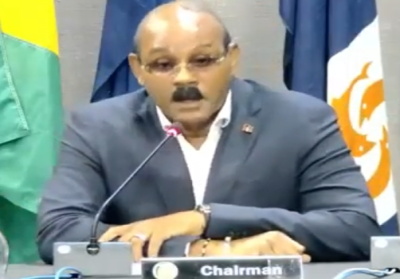
ST. JOHN’S, Antigua, Jun 23, CMC – The Organisation of Eastern Caribbean States (OECS) is to seek a suspension of the Common External Tariff (CET) as the sub-regional grouping moves towards enhancing trade relations with South America, Panama, and the Dominican Republic, Antigua and Barbuda’s Prime Minister Gaston Browne has announced.
Browne, who chaired the two-day OECS Summit that ended here on Monday, told a news conference that the meeting had discussed the issue of trade, and we felt that the region must look at alternative trade destinations to include South America, particularly Panama.
“As you know, Cologne is the largest free trade zone within the hemisphere, and they do in excess of 33 billion US dollars a year in trade, and there are many opportunities for us to increase trade and to get very good quality products at affordable prices,” said Browne, the new chairman of the nine-member grouping.
He said that many of those products leave Panama, then they go to the United States, subjected to a markup,” and then we are purchasing more expensive goods.
“Now, the US’s policy of tariffication, which in itself would have increased the cost of goods, is why we have to explore new markets to try and address the issue of the rising cost of living within the OECS.
‘Many of our nationals complain about the increase in prices, and so that is a regional issue that is affecting our people, even affecting the quality of life. But outside of looking to South America and even Central America, we believe that the opportunities to import goods, especially food items from the Dominican Republic”.
Prime Minister Browne told reporters that the goods from the Dominican Republic could be obtained at “very, I would say, reasonable prices, competitive prices.
“But to achieve that, we’ll have to approach CARICOM (Caribbean Community) for suspension of the common external tariff. So we have asked the OECS Commission to do a study to determine the products that we can import at lower prices from the Dominican Republic, and for us to approach CARICOM for a temporary suspension of the CET…so that we will have the opportunity to import goods at lower prices into the sub-region.”
Browne said that currently, Antigua and Barbuda receives at least two shipments out of the Dominican Republic every week and “so we have already established direct shipping links, and if we can import products directly at a cheaper price, that will certainly help to reduce the cost of living here in Antigua and Barbuda and within other OECS countries”.
The OECS groups the islands of Antigua and Barbuda, Dominica, Grenada, St. Lucia, St. Vincent and the Grenadines, St. Kitts and Nevis, Montserrat, Anguilla, and the British Virgin Islands (BVI), and Browne said that the two-day summit also discussed the Citizenship by Investment Programme (CBI).
Several of the OECS countries have CBI programmes through which foreign investors are granted citizenship of a particular OECS country in return for making a significant contribution to that country’s socio-economic development.
Prime Minister Browne said that the discussions on the CBI came against the backdrop of threats by the European Union to discontinue visa-free access under their Schengen visa-free programme.
“It’s a matter of concern for heads, and we are now seeking to engage high-level officials within the European Union to see what we can do to, you know, get them to reconsider their position or to come to some other arrangement, possibly to introduce an ETA, an electronic travel authorisation, rather than suspending visa-free access.
“But before we make such an entry, you want to make sure that we engage in high-level discussions with European officials, and we’ll be making efforts to try and have that engagement, hopefully by the fall of this year, and again just making sure that we continue to maintain constructive dialogue with the European Union, to obviously reiterate how important these programmes are.”
Browne described the CBI programme as a “very important source of non-cash revenue for the respective countries, and without any compensatory income, clearly it will result in some significant displacements in our respective countries, especially those countries that are heavily reliant on CBI revenues”.
He said the leaders also discussed the sub-region’s marine space and developed strategies as to how they can sustainably exploit the marine resources, going beyond the typical fisheries, and at the same time, engage in research to see what type of marine resources are available, including mineral resources.
He said that will determine whether or not “we have them in the commercial quality and quantity, so that we can explore alternatives.
“In fact, we need to diversify our economies within the OECS. Most of us, all of us, for that matter, we are tourism dependent, so if we can harness resources that may be available, even resources that we may not be aware of may exist in commercial quantities, then that will certainly help us to diversify our communities, our countries, for that matter.
“So we have asked the OECS Commission to develop a paper as to how we can collaborate and whether or not we can employ companies with satellite technologies and other technologies to help us to do a survey of our marine space and to see precisely what mineral and other resources we may have.”
Browne said that the leaders have decided to cooperate and share in the cost, because in many instances it will be cost-ineffective for the islands to go it alone.
He said that another area to be “exploited” will be the sargassum situation that has been a major problem for the OECS and the broader Caribbean.
“We have also asked the OECS Commission to look at motor research technologies and equipment that can help us to not only harvest the sargassum weed, but also to convert it into usable products.
“And where we can cooperate and to share costs associated with the acquisition of these technologies, we’re willing to do so. In fact, that will help to resolve a potential threat to our tourism product, while at the same time potentially helping us to convert sargassum into usable products or useful products, including fertiliser and possibly fuel, if they’re cost-effective. “
Browne said that the leaders have also looked at the possibility of cooperating to create a carbon market within OECS, in which they can combine individual carbon credits as a result of their large seascape, which is about 500,000 kilometres larger than existing land space, to create this carbon credit market.
“Clearly, the carbon sequestration that takes place within the respective countries is not sufficient for us to go it alone, so we are looking at the possibility of having a regional market so that we can negotiate with the European Union carbon credit market initiative or some other market to buy our carbon credits, so that we can raise revenues.”
CMC/pr/ir/2026