
By Peter Richards
BRIDGETOWN, Barbados, Jun 5, CMC – The newly elected president of the Caribbean Hotel and Tourism Association (CHTA), Gregor Nassief, confirmed on Friday that he had been denied a renewal of his United States visa, saying the issue may be in keeping with Washington’s implementation of partial travel restrictions for nationals of Antigua and Barbuda and Dominica.
The restrictions stem from President Donald Trump’s concerns regarding the screening and vetting of applicants through the Citizenship-by-Investment (CBI) programme, through which foreign investors are granted citizenship of these islands in return for making a substantial investment in their socio-economic development.
Both St. John’s and Roseau have been holding talks with officials in Washington on the issue that also includes suspending the issuance of certain immigrant and non-immigrant visas.
The measure came into effect as of January this year, with Washington imposing a limited ban on Grenada, which came into effect in April.
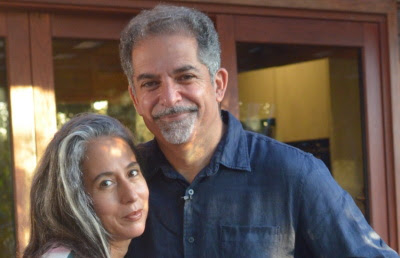
Nassief, whose tenure as the CHTA president takes effect at the end of this year, told the Caribbean Media Corporation (CMC) that while his 10-year visa is due to expire in August, the visa for his Venezuelan-born wife expires in about two weeks.
“So, you know, she didn’t have much hope, but I had some hope, and I said, let’s go, let’s try. I’ve had a 10-year visa, as most people have. I lived in the US. I have an extensive network of friends,” he told CMC.
“We were turned down, we were denied … the gentleman was very clear. He asked some questions, and then he said, ” Well, you know, there’s a ban on Dominica, so we’re not able to issue a visa. And that was the end of it, really.”
Nassief, a prominent hotelier and businessman, said that he understood that “there’s also this bond apparently where in some cases at their (US) discretion they could offer a bond where you put up US$10,000, and you can get a single-entry visa for three months.
“But of course, for the requirements that I have for travel to the US, which is pretty tenuous, that would not have made any sense. But they did not offer such a bond in our case,” he told CMC.
Nassief said that in his application for a renewal of the visa, he tried to make the application “like you would a CV, as convincing as possible on the genuine need. And it’s not just the hotel side of things.
“I have a software and technology business in Latin America, and we have just opened offices in the US, a major investment. And I’ve been spending a lot of time supporting that venture. My wife’s mom is 87 years old.
He said that the Nicaraguan-born woman is “not able to travel to visit us anymore. So my wife travels up to visit her.
“My wife’s sister is also in Florida. And obviously that’s not possible now. But yes, I mean, we obviously tried to put forward the facts of our situation, and we were tuned down. Now, I don’t want to assume that everyone will be tuned down,” he said, adding that he would continue to encourage people to try, especially if they have an emergency, like a medical situation.
“I mean, the human impact and cost of this is just terrible. It’s for persons who really have an emergency medical situation, who have a child’s graduation they want to attend or a funeral,” Nassief said, adding that he has a close friend who has a spouse ”who is very ill and they turned him down. He wanted to visit her”.
Nassief, who is in his late 50s, was named Caribbean Hotelier of the Year and, as of May 2026, made history by being elected as the CHTA president.
He is the chairman and chief executive officer of GEMS Holdings Limited, which owns and operates Secret Bay, The Residences at Secret Bay, and the Fort Young Hotel & Dive Resort in Dominica.
Nassief told CMC that the denial of the visa “may have more to do with me. I don’t know. You can never tell.
“You know, they don’t give you any specifics. And I would hope that I would be very happy if it were specific to me, and more people were able to get through. So I encourage people to continue trying.”
He recalled a situation about 15 years ago where the United States revoked the visas of his family. “We never understood why. My wife, my two kids. And then they gave us our visas back, and there was no problem. I mean, I remember I was always interrogated by immigration in Miami because I had a name similar to a Lebanese terrorist, apparently.
“And then when he died, like 20 years ago, the interrogation stopped. So you just don’t know if there are other factors at play. So I don’t want to assume that everyone would receive a denial as I did.”
Nassief acknowledged that the visa situation has implications for the entire Caribbean, noting that “I’m more talking about the human element of the person,” citing the impact on medical, on education, and splitting families up.
“I mean, that’s absolutely significant. And then from a tourism perspective and from a business perspective, obviously, there’s a lot of investment. There are a lot of conferences. There are a lot of relationships and networking that we are required to do as business people, as members of the tourism industry.
“I travel to the U.S. quite extensively to promote Dominica as a destination…and I spend a significant amount of time on that and on the properties. I am part of the DHTA (Dominica Hotel and Tourism Association). I am part of the CHTA…and obviously not being able to represent the CHTA at important conferences in the U.S. is difficult.”
But Nassief said he is confident that the CHTA, established in 1959, “has an incredibly strong group of people, past presidents,” including the current chief executive officer, Vanessa Ledesma, who is based in Florida.
“So I’m not too worried there. They can always represent the association. It does not have to be the president,” he said, noting that he does not think “Dominica and Antigua and Barbuda have really contemplated or digested the potential impact of this.
“And I think visas are now starting to expire more and more. So they’re going to be more and more people travelling to try to get a renewal of the visa,” he said, noting that most of the airlift from the U.S. is really, really critical.
“Now, people don’t always understand that an important part of the load factor on those planes is local persons travelling back and forth for the same things, education, medical, family, shopping, business, whatever.
“And if more and more persons are not able to travel, that means the load factors on those flights could potentially put some airlift at risk. And I would hope and pray it does not,” he said, adding “on the U.S. side, it’s hard to really contemplate and to understand, because obviously there are benefits to the U.S. economy of all of the travel from the Caribbean, investment from the Caribbean, tuition, medical, vacation, business.
“So there are impacts all around, and I am just very worried that we haven’t fully digested,” he said, telling CMC he has not asked the CHTA to take up the issue with the United States on his behalf.
“No, I have not discussed or requested that with the CHTA. This is something that has just happened over the last few days. And I am seeing what potential avenues may exist to get reconsideration. And I could also appeal directly to the (US) embassy in Barbados,” he told CMC.
But Nassief said that it is “very important for our islands not to compromise sovereignty. But at the same time, I think we have to be very sensitive to whatever the concerns are and to deal with them as best as we can and as aggressively as we can.
“And I think it’s unfair to hold a population hostage to whatever issues exist with a government. But sometimes that occurs. And I would just appeal to the U.S. to appreciate how integrated our life is with America and with American life, and the education of our children, the health care of our citizens, the success of our businesses and tourism industry, and the importance of airlift coming from the U.S. to the Caribbean
“There’s so much interconnectedness between the U.S. and the Caribbean,” he said, telling CMC, “I would plead that we sit around the table and try to sort things out as soon as we can, because the impact on human life is very significant”.
CMC/pr/ir/2026