
By Staff Writer
PORT OF SPAIN, Trinidad, May 29, CMC -Trade union leaders Friday condemned the decision to ban protests within 500 metres of what has been described as “sensitive areas” in Trinidad and Tobago, including the official residence of Prime Minister Kamla Persad-Bissessar.
President General of the National Trade Union Centre (NATUC), Michael Annisette, has described it as a “sad day” in the country when the rights of citizens and unions are being taken away.
“It has no place in a democratic society. We must allow peaceful protestation. It has nothing to do with the institution. If the institution is wrong, the right to protest is more fundamental than anything in my humble view,” Annisette said.
“Because if we take away that, we would be allowing a situation whereby any institution has the unfettered right to do whatever they want and be working class, and the citizenry cannot protest against what they deem to be injustice,” he said, adding, “it’s a sad day. It’s a sad day”.
The Trinidad and Tobago Police Service (TTPS) is urging protesters to obey the law as they prepare for another round of protest on Friday over the police involved killing of a 31-year -old man on January 20 this year.
The police said that while protests are still allowed under the State of Emergency (SoE), such activities must be peaceful and not within 500 metres of what has been described as “sensitive areas.”
The protest on Friday is being planned for outside the forensic building on the outskirts of the capital, and the main organiser, Alyssa Phillip, who was released from police detention on Thursday night, said that the protest would go ahead at 15.00 hours (local time)
Phillip, as well as her mother, Camille Caresquero, and Jason De Silva, a social media personality, were released on their own bail late on Thursday night, one day after being charged with disorderly conduct and inciting public opinion in a manner considered prejudicial to public safety. They are due to appear in court on Monday.
Last week, the police said warrants had been issued for the arrest of Kaia Sealy, following the January 20 event when police fired upon a vehicle in which she and her husband, Joshua Samaroo, were travelling in Valsayn, east of here.
She had been charged with three counts of shooting with intent to cause grievous bodily harm at the police, manslaughter with police alleging that Sealy, who was shot multiple times during the incident and left paralysed, unlawfully killed Joshua Samaroo, in addition to other related charges.
But the police have now said that Sealy, who is in the United States undergoing medical treatment, will now be charged with possession of a firearm; possession of ammunition; possession of a firearm with the intent to endanger life and discharging a firearm within 40 metres of a public place.
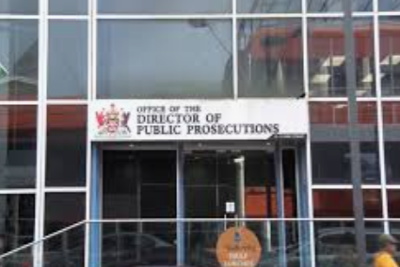
The legal notice was signed by Police Commissioner, Allister Guevarro, on the same day a demonstration took place outside the Office of the Director of Public Prosecution (DPP).
The document states that the 15 no-protest zones include the Parliament and Parliamentary Complex, the Office of the President, the Office of the Prime Minister, the Diplomatic Centre, the Office of the Attorney General, the Ministry of Finance, the Ministry of Defence, and the Ministry of Homeland Security.
Annisette said he had been listening to some of the commentaries on the issue and that “people are entitled to their views.
“And I hope that the views of the labour movement, the trade union movement, and the citizens will be respected,” he added.
President of the Trinidad and Tobago Unified Teachers Association, Crystal Ashe, said the move by the authorities is an attempt to stifle his union, which is seeking the payment of arrears to teachers.
“We are a bit concerned because we just came out of May Day, and we are moving into Labour Day (June 19). So I want to ask the question, is it that the present regime is trying to muzzle trade unionism? Is it that we can no longer speak freely? If it is that persons are doing so peacefully and all in accordance with what the SoE would have stated and identified in writing, why is it that persons are being prohibited from some of these places?
“Now I can understand some of the very sensitive places. However, the Ministry of Education is a place that everybody goes to quite frequently to check on many things. So it is that you want to stifle TUTA?
“Is it that we are speaking too much? How did TUTA make that list? How did the Ministry of Education make that list? That’s what I want to know. And what sort of threat would TTUTA present? What sort of threat can we present such that the premises would have to be identified on said list?” Ashe questioned.
He said while TTUTA has no planned demonstrations at this time, if needed, the executive is not afraid.
“Even if they have it on their list and they say that it’s prohibited, that doesn’t mean that you can’t ask permission. If they feel the need to remind us because they think we are stupid, no problem with that. But I would ask why, and what is the reason? I don’t just want you to show me a list and refer me to a list. I want to know the reason why.
“So we have… a legal department that we will write when it is that we see fit. At this point, we have nothing scheduled in terms of that, in terms of protest action at the Ministry of Education. But if it is needed, TTUTA is not afraid. TTTA is not afraid at all. TTUTA will do what is necessary to ensure that its membership is taken care of,” Ashe said.
He said that if the powers don’t like what his union is “doing, well, we can’t help that.
“Ashe didn’t come into the work, and the executive didn’t come into the work to make friends. We came to do our job, just as the politicians did. They came to do their job, and we will do our job to the best of our ability once there is breath in our bodies.”
President of the Registered Nurses Association, Idi Stuart, says the government is aware of plans by his union to picket the Parliament soon and described the latest developments as “very frightening.
“It is frightening. The association wants the population to understand this is indeed a most troubling and frightening development in Trinidad and Tobago. This goes to the roots of our democracy,” he said, adding that the association, “as the public is fully aware, was already planning to hold a demonstration outside of parliament in the not-too-distant future.
“While we did not yet write the Commissioner of Police, we were waiting on the mid-year budget review to see if the Minister of Finance would have indicated when healthcare workers would receive their salary increase. ”
“This has taken us like a thief in the night,” Stuart said, condemning the move, saying it is an attempt to restrict trade unions.
“We are strongly against utilising the state of emergency and the regulations that are attached to it to continue to restrict the peaceful activities of trade unions, of NGOs, of interest groups, who are simply articulating their dissatisfaction with what is transparent.
“It’s a very unfortunate and very frightening development, and in the coming days, we hope the umbrella trade union bodies, the joint trade union movement, NATUC, and all of the other groups come out publicly, state their dissatisfaction with what is transpiring now. It’s a very troubling scenario.”
Meanwhile, attorney Larry Lalla said there are no laws in Trinidad and Tobago preventing public protest.
Addressing a meeting of the main opposition People’s National Movement (PNM) on Thursday night, Lalla said he was sending a message to the Police Commissioner.
“In this country, no laws prevent public protests. There are no laws. The law is clear. If you want to hold a public meeting, you have to give the Commissioner of Police 48 hours’ notice in writing. He could choose thereafter to do whatever he wants, to intervene to stop you, or to let you go ahead.
“If he chooses to stop you, he has to give proper reasons. If you want to hold a public march, you need his permission. We see circulating today an order made by the Police Commissioner banning protests from a list of buildings, including our Parliament.
“Well, I want to send a message to the Police Commissioner that that order is not a proportionate exercise of your powers under the emergency regulation for the state of emergency,” Lall said, warning that the Commissioner could cost the state a lot of money.
“And I want to send a message to the Attorney General. Have a word with that Commissioner of Police because he’s going to cause this country a lot of money and damage. Money that the country doesn’t have.
“Imagine this, Commissioner is telling us that a man cannot take a placard and go and stand up, not in front of Parliament, you know, in Woodford Square. That is what this oppressive UNC (United National Congress) government is banning right now, and we cannot, we cannot allow that.
“The minute we allow that, ladies and gentlemen, is the day we all have to start packing and leaving this country,” said the Senior Counsel.
CMC/ah/ir/2026